

If you’ve ever experienced jaw pain, headaches or tension in your face or neck-you have likely heard of TMJ. What many people don’t realize is this: not every dental practice treats TMJ, and yes, there are solutions beyond mouth guards.
TMJ Explained
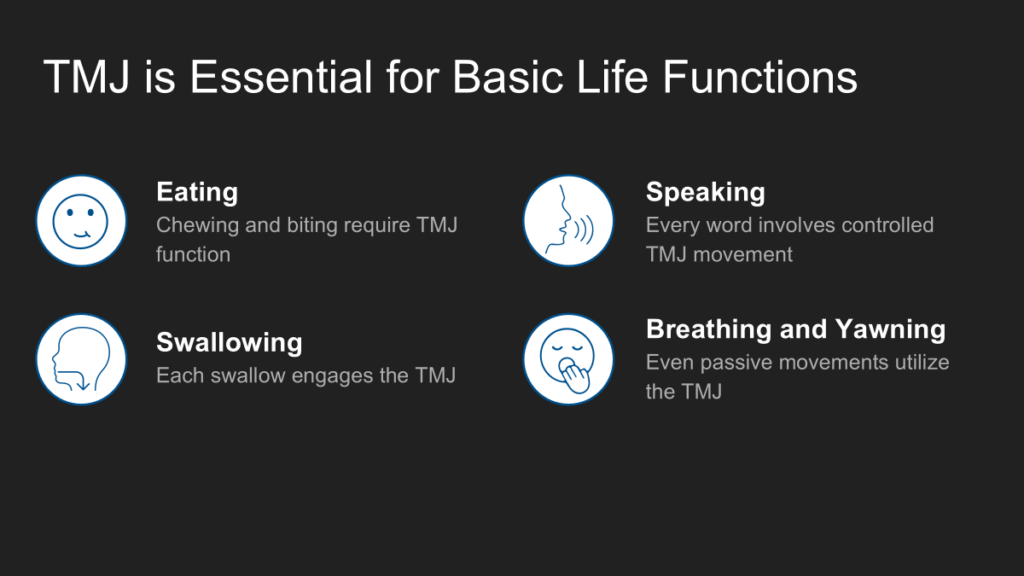
TMJ is short for Temporomandibular Joint. TMD stands for Temporomandibular Disorder which groups conditions that cause chronic pain and dysfunction of the jaw, muscles, joints and nerves.
This often involves clicking, popping or locking of the jaw, along with headaches, earaches and radiating pain or tension in the face and neck.
TMD, often known as TMJ, is a complex and severely under-researched disorder. An estimated 10 to over 35 million people in the United States are affected.
What Causes TMD?
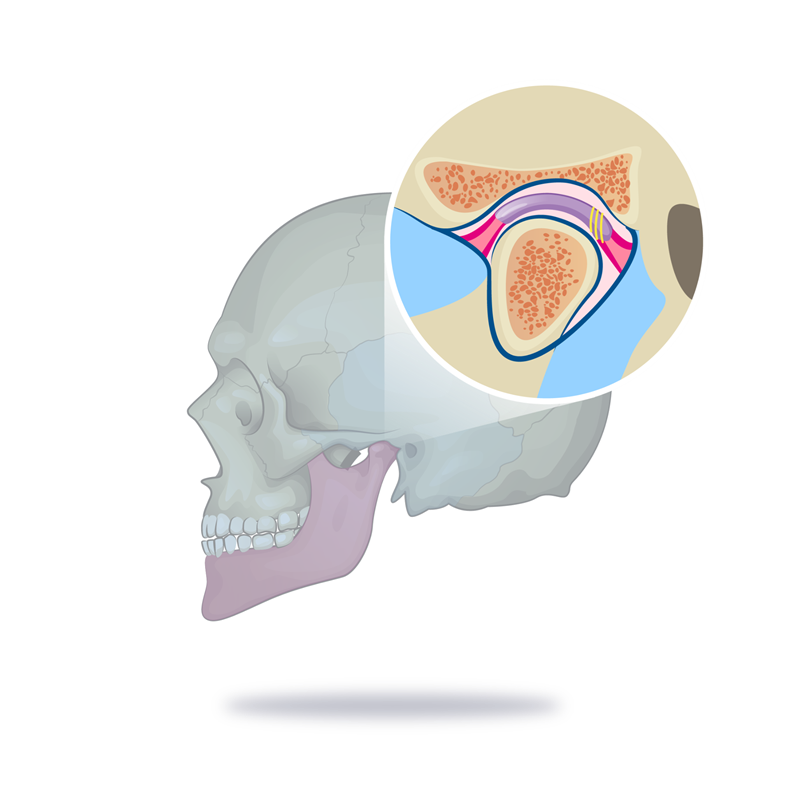
This is where it becomes complex, and why many dentists shy away from treating TMJ disorders.
Causes can include stress, autoimmune diseases, injections, injuries, procedures, medications, arthritis as well as hormonal, genetic and environmental factors that increase risk of TMJ.
TMD is on the rise, And many dentists are avoiding it
Due to its complexity, treating TMJ disorders requires knowledge, skill, research and experience. Many dentists avoid treating it because it often requires extra visits, longer conversations and interventions.
It can feel like a long process for both the patient and the provider. However, TMD is on the rise, and now more than ever, it’s important to educate and empower patients.
TMD is complex, but not untreatable. It’s important to understand that TMD treatments are a journey, not a quick fix–but it can be a life changing one.
How Do We Approach TMJ Disorders?
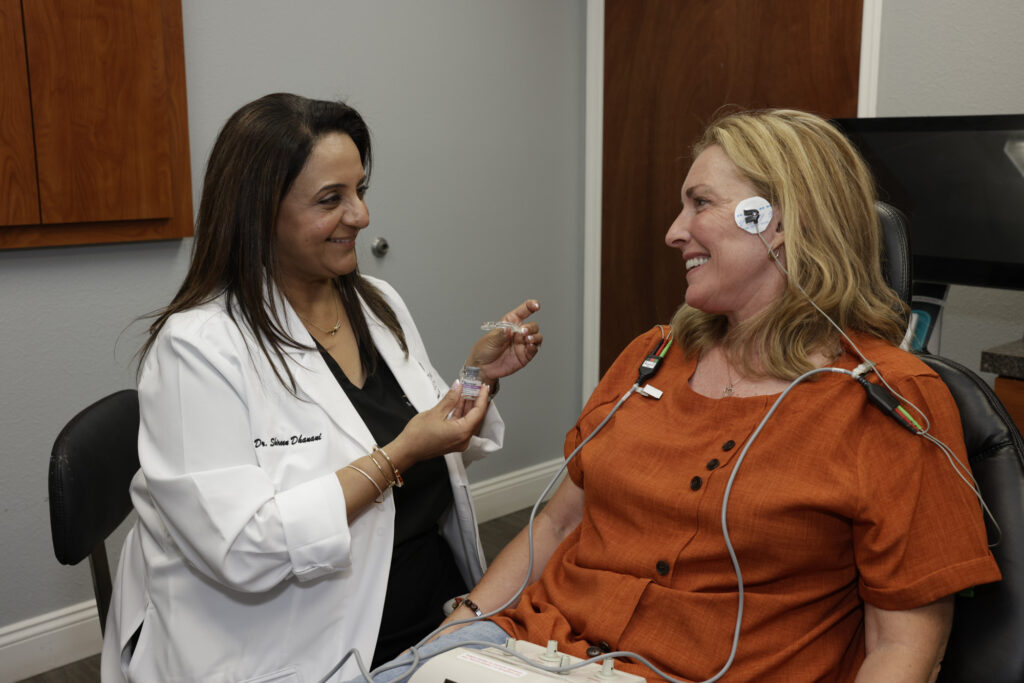
Led by Dr. Shireen Dhanani, My Dental Touch specializes in treating TMJ disorders.
We begin with a comprehensive exam to understand your lifestyle, symptoms and history. This includes a 3D cone beam scan which allows us to visualize your bone structure, joint spaces, and abnormalities in detail. This helps us diagnose conditions like osteoarthritis, fractures, erosions and ankylosis.
Once diagnosed, we create a treatment plan tailored to your specific needs.
Treatment Options We Offer
Mouth Guards / Splints or Orthotics:
These are custom devices made to be worn at night which protects the teeth to reduce jaw pain by repositioning the jaw joint and relaxing the muscles.
Botox / Injections:
Botox (Neuromodulator) can be injected into the masseter and temporalis muscle to temporarily relax the jaw muscles-significantly reducing clenching, headaches and jaw pain.
ESTM:
We usually pair this therapy with a mouth guard for best results. ESTM (Electrical Stimulation) uses electric pulses to decrease muscle spasms and keeps them relaxed targeting muscle tension.
Emvital:
A 1064 laser that is designed to treat TMJ Disorders by delivering deep, controlled thermal energy to the jaw muscles and joints. It reduces muscle spasms, eases pain and improves mobility.
Emface:
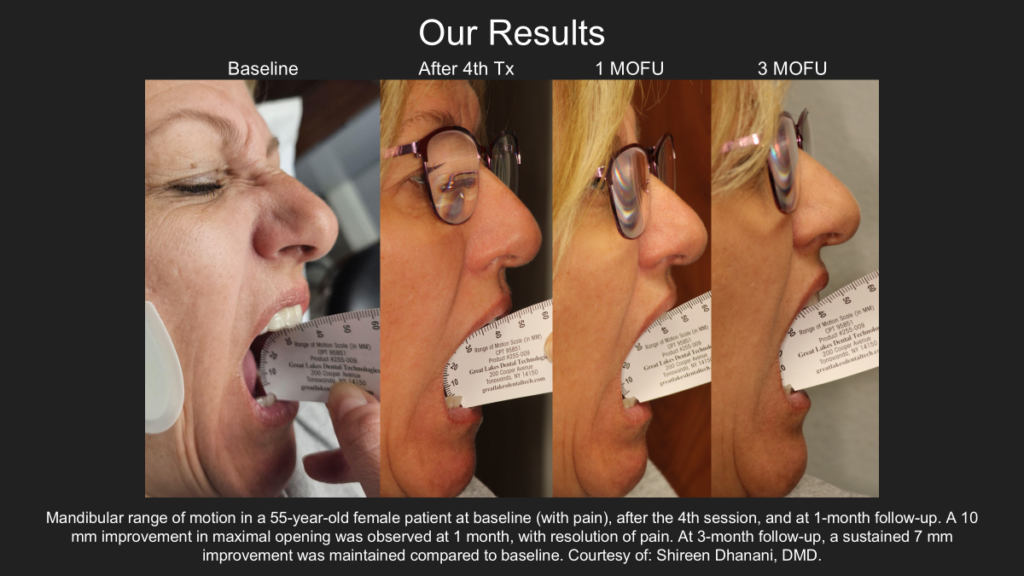
Works by combining radiofrequency (RF) and high-intensity electrical stimulation (HIFES™) to relieve jaw pain, tension, and muscle dysfunction.
Emface Before & After Clinical Study
Which One Is Best for You?
This depends internally on your symptoms, lifestyle and the root cause of your condition.
Conclusion
TMJ disorders can feel overwhelming, especially when symptoms affect your daily life. Choosing the right clinic is important–experience, knowledge and skill matter.
At My Dental Touch, Dr. Shireen Dhanani is proud to lead multiple clinical studies regarding TMJ disorders, and keeps up to date with the latest research and technology to provide the best care possible.
If you’ve been experiencing jaw pain, headaches, or tension and aren’t sure where to start–we’re here to help!